The Ferrers flock graze land that is underwater several times a month. This is not a hardship for them; salt marsh is excellent grazing, full of samphire, sea aster, sorrel and thrift, all of which hold salt and none of which grow on a field inland. What it means practically is that the sheep have to be moved according to the tide table, and the tide table does not care what day of the week it is.
Why it tastes different
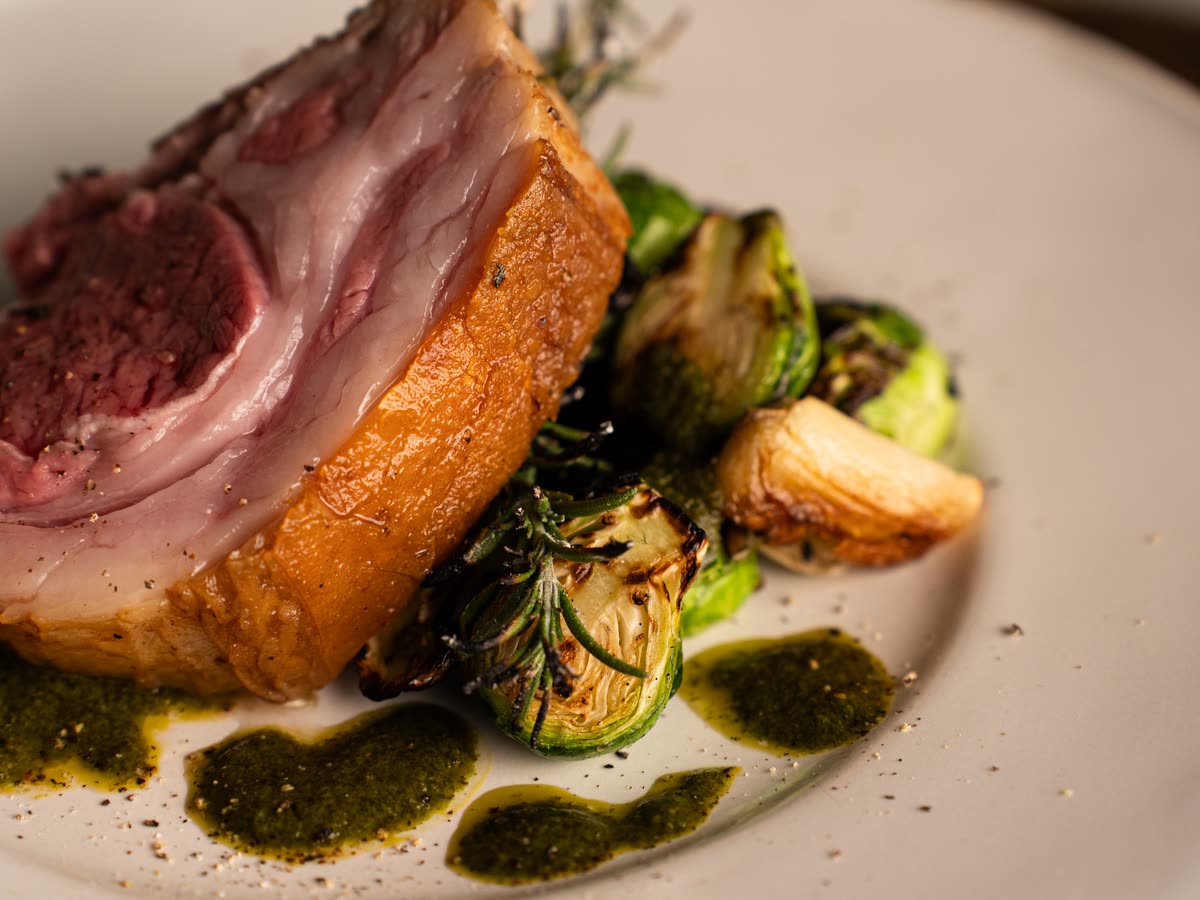
The meat is seasoned from the inside. Not salty — seasoned. There is a mineral, almost iodine note that you also find in the oysters from beds three hundred metres away, and it means the lamb needs far less from the kitchen than lamb usually does. We salt it lightly and late. Anything more and you are shouting over it.
People ask what we do to it. Mostly we try not to do very much.
Rowan Teasdale
Two carcasses a week
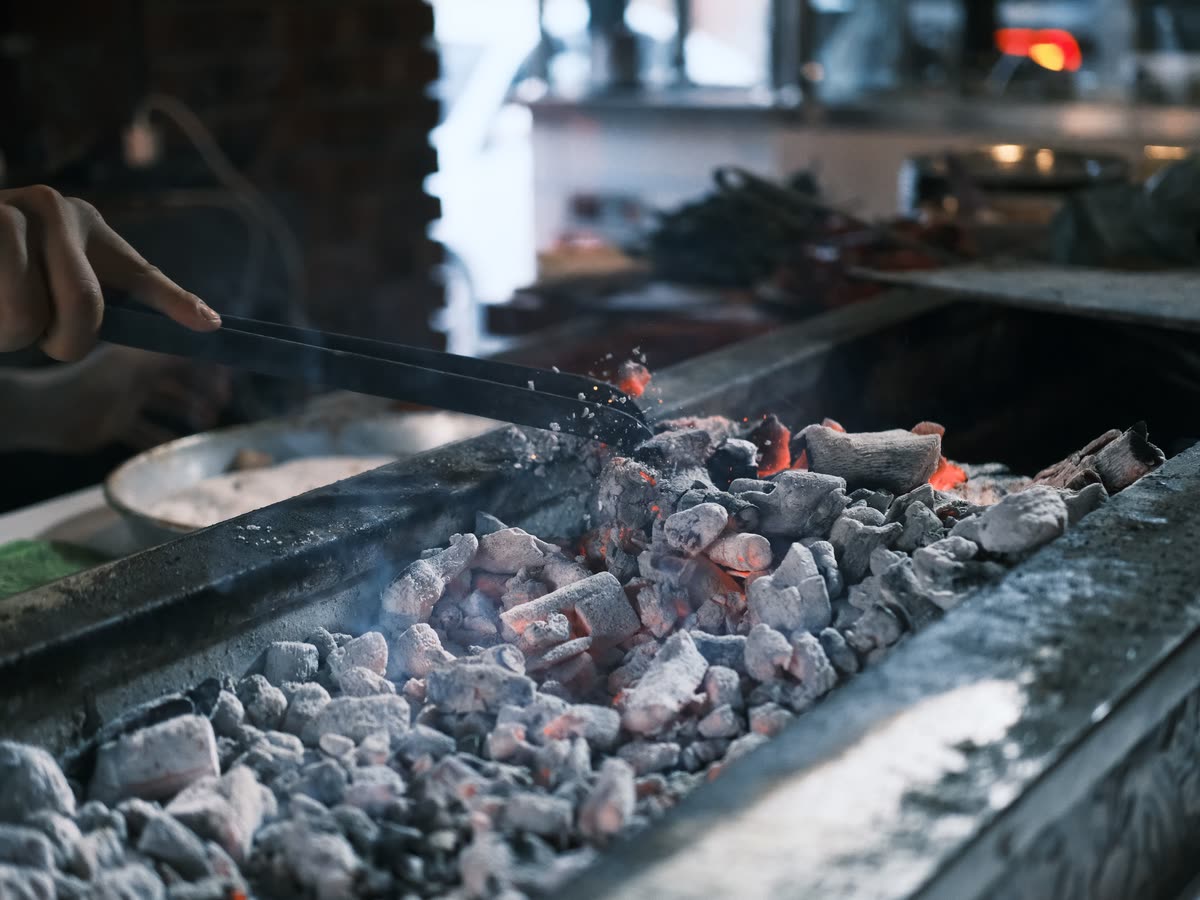
We buy whole animals, which sounds noble and is mainly practical: it is the only way to get the shoulder, which is the best part, and it forces the kitchen to find a use for everything else. The loin goes on the fire and is gone by nine. The shoulder is an eight-hour job that starts as the previous night's fire dies. The neck becomes the staff meal, the bones become the glaze, and the fat is rendered and used on the potatoes.
Between November and February there is no marsh lamb at all, because the animals are not ready and pretending otherwise would be a lie. The fire section gains a mutton dish instead, which a surprising number of guests prefer.