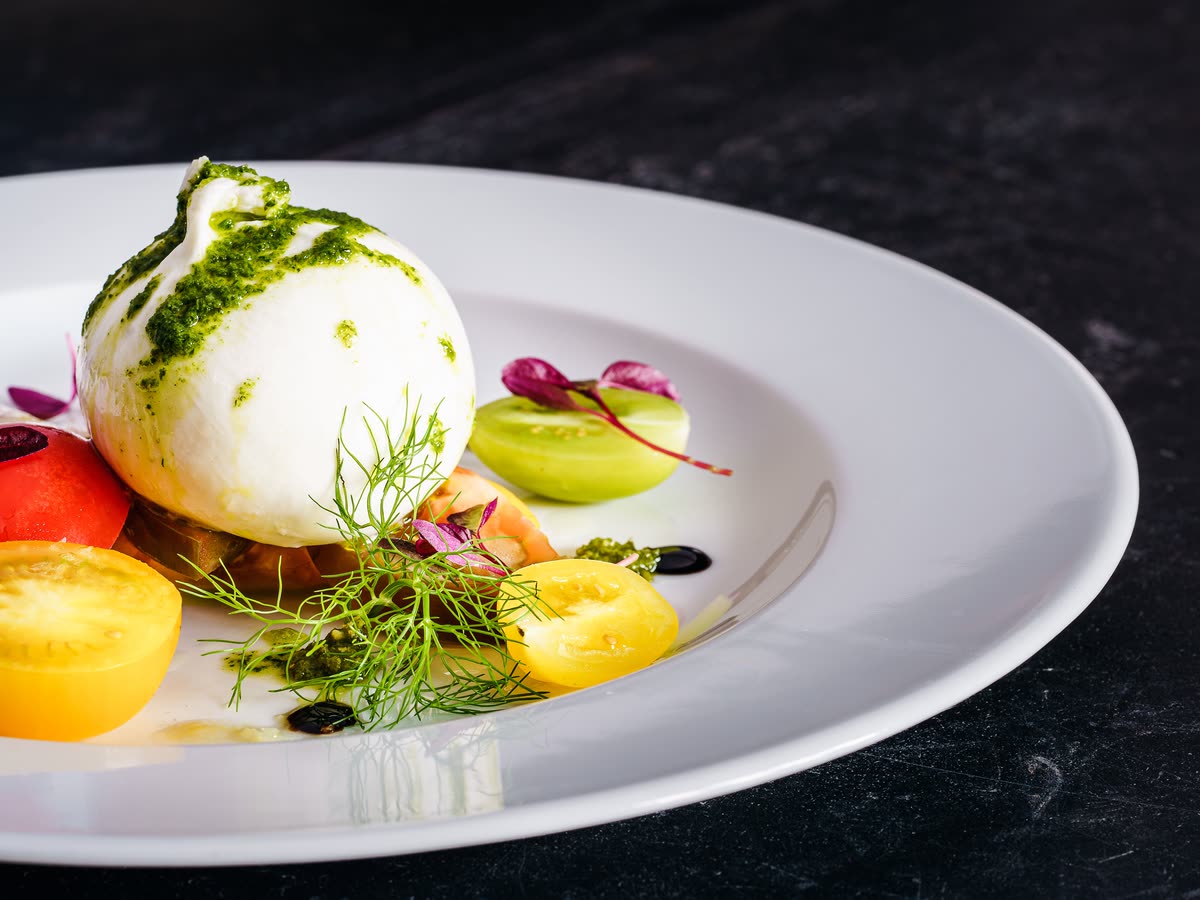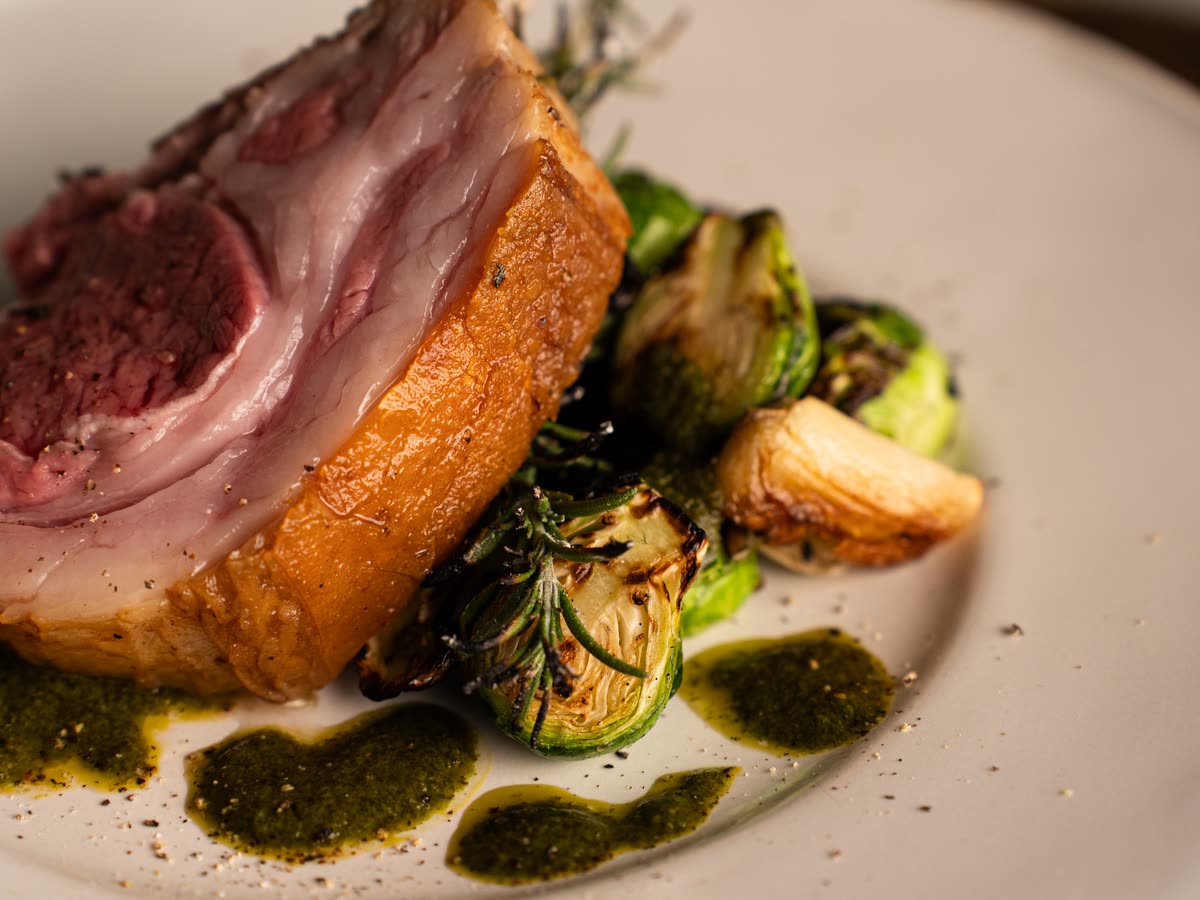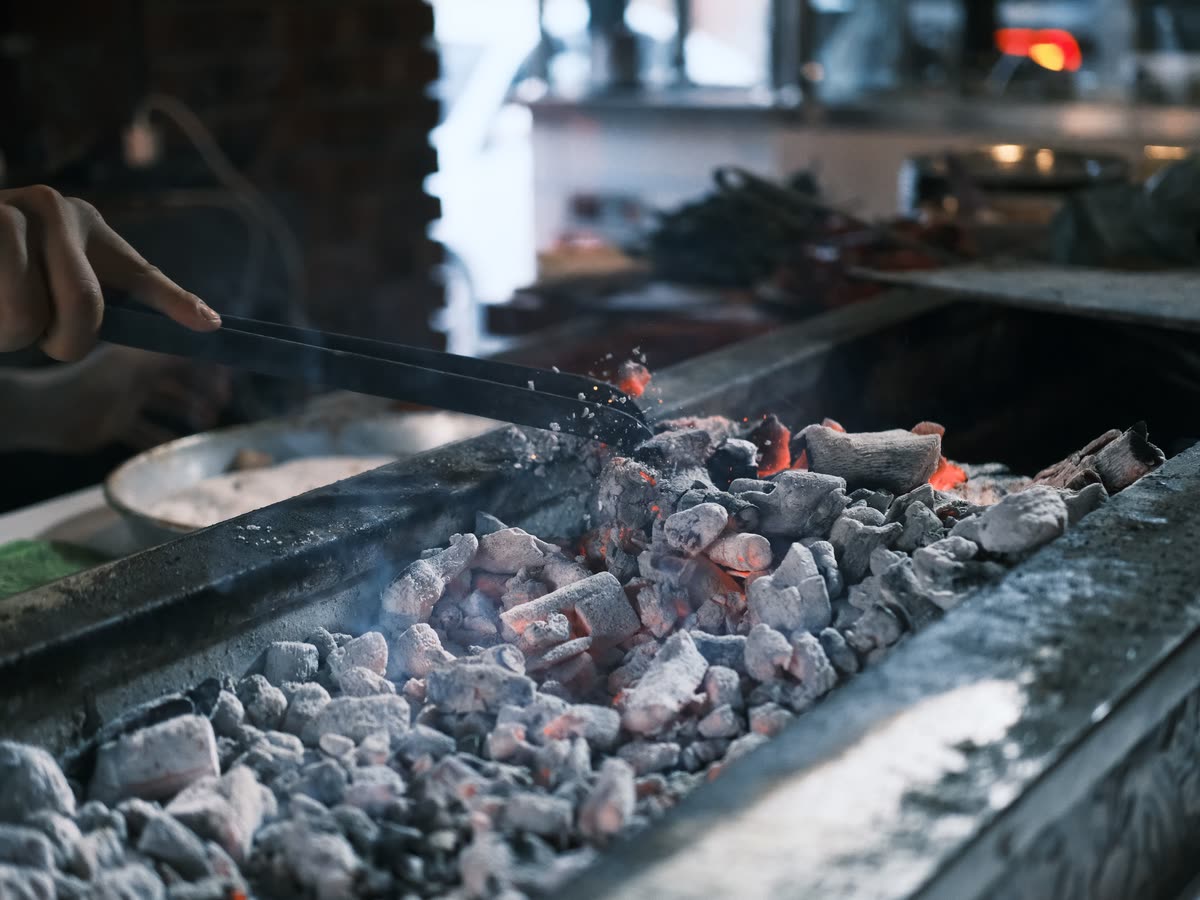
A wood fire does one thing: it gets hot and then it gets less hot. Everything a fire kitchen does is a consequence of that single fact. You cannot turn it up at eight o'clock because a table ordered two turbots. You can only decide, at eleven in the morning, how much wood to burn and where to put it.
The four heats
- Close and fierce, directly over new coals: the loin, the scallop, anything that wants colour in ninety seconds.
- High and steady, a hand's width above: fish on the bone, which needs to cook through without the skin going first.
- Falling, at the edge of the bed: the shoulder, the duck crown, anything measured in hours rather than minutes.
- The ashes themselves: pears, beetroot in clay, whole onions for the ember oil. Buried, forgotten, dug out later.
A chef who has worked on gas for ten years finds this maddening for about three weeks, and then finds gas maddening for the rest of their life. You stop cooking to a timer and start cooking to what is in front of you, which is both the most obvious idea in cooking and the hardest one to actually do.
The fire is not a piece of equipment. It is the first thing that turns up for work and the last thing to leave.
What goes wrong
Fat on hot coals. That is it, that is the main one. Flame is not heat; flame is fat burning, and it puts soot on your food and bitterness in it. The fix is not a water bottle, it is moving the food and letting the fire settle. The second thing is impatience with the wood: a fire that has not burnt down properly gives you smoke rather than heat, and smoke is a seasoning, not a cooking method.