Salt-marsh lamb, aubergine, anchovy
The animals graze the marsh a mile from the kitchen. You can taste the tide in it, and that is not a figure of speech.
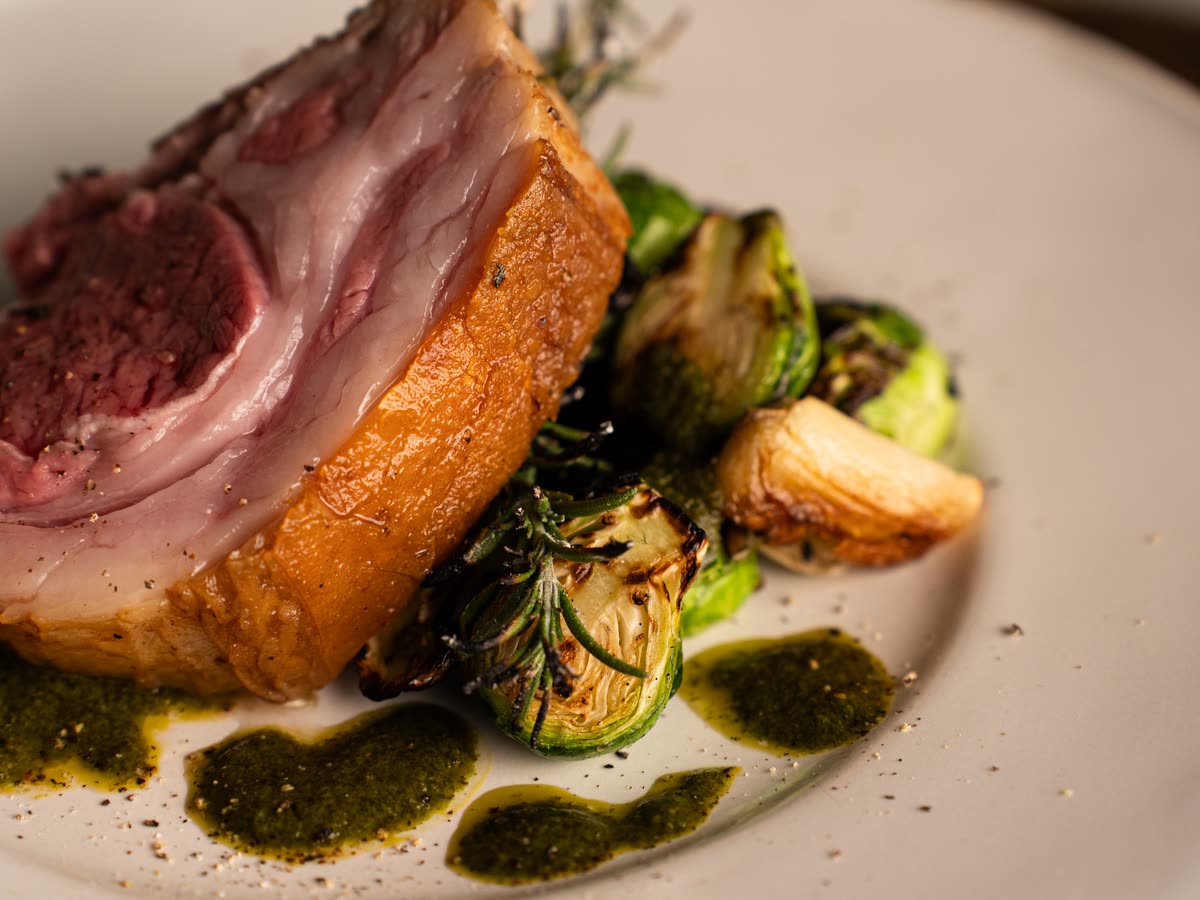
Salt-marsh lamb is not a marketing term. Sheep grazed on tidal marsh eat samphire, sea aster and sorrel, all of which hold salt, and the meat comes out seasoned from the inside. It needs less than you would think and forgives less than you would like.
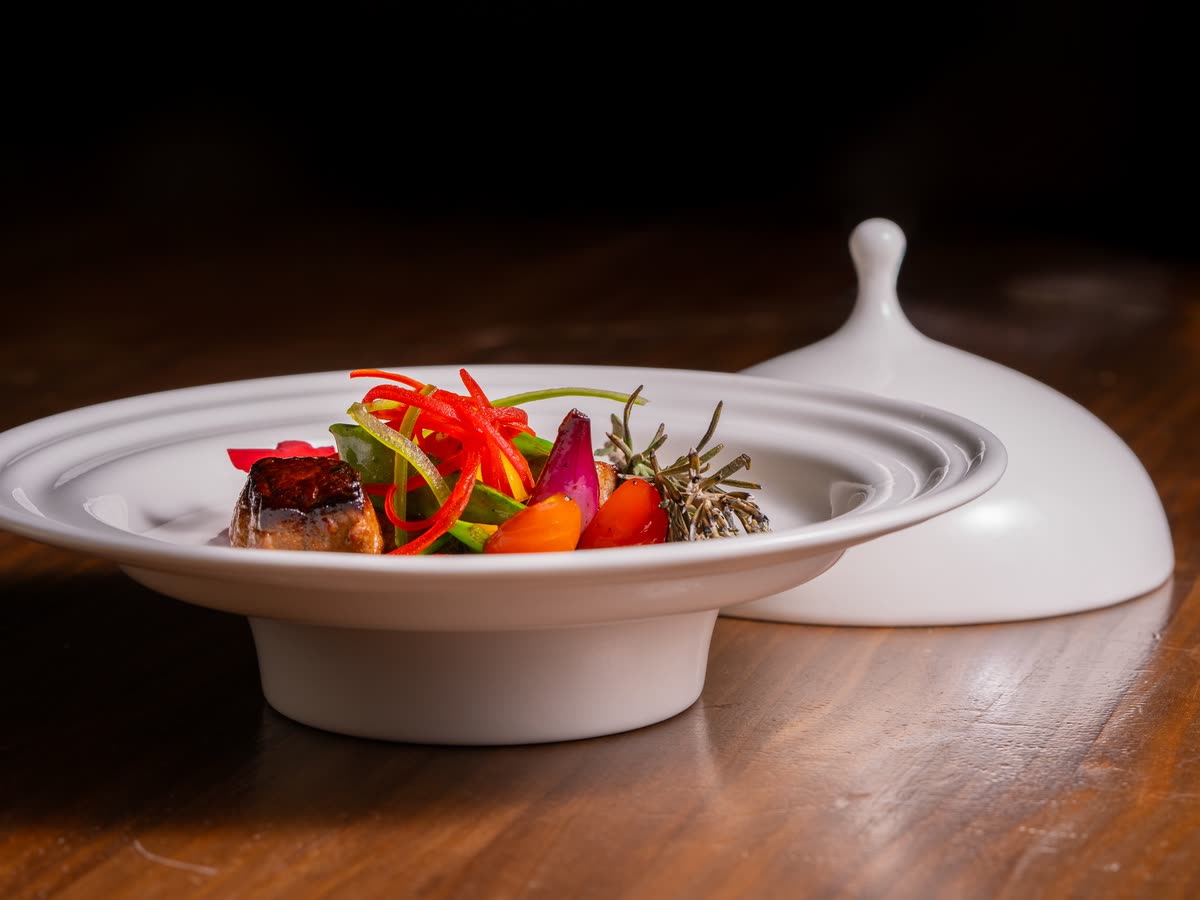
The shoulder goes into the oven as the fire dies on Sunday night and comes out on Monday morning. It is picked warm, pressed between trays overnight, cut into squares and finished fat-side down on the bars until the edges are lacquered. The loin is treated with more respect and less time.
Aubergines go straight onto the embers until the skins are ash and the insides have given up entirely. That flesh is beaten with anchovy, garlic and lemon into something dark and savoury that sits under the lamb and does most of the arguing.
On the plate
- Shoulder
- Eight hours at falling heat, pressed overnight, finished on the bars to order.
- Loin
- Four minutes over oak, twelve minutes resting, sliced against the grain.
- Burnt aubergine
- Cooked in the embers to collapse, beaten with anchovy, garlic and lemon.
- Finish
- Pan juices let down with marsh herbs and a spoon of last year's preserved lemon.
To drink
Clos Bartelmy Gamay 'Vif' — served cold, which is the correct way to drink it with lamb.
The cellar listFerrers Marsh Flock
One mile south along the sea wall
Around ninety ewes on tidal grazing, moved by the tide table rather than the calendar. Two carcasses a week, whole, nothing wasted.