Oyster, ember oil, sea buckthorn
The first thing almost every table eats, and the dish that decides whether the rest of the evening will be any good.
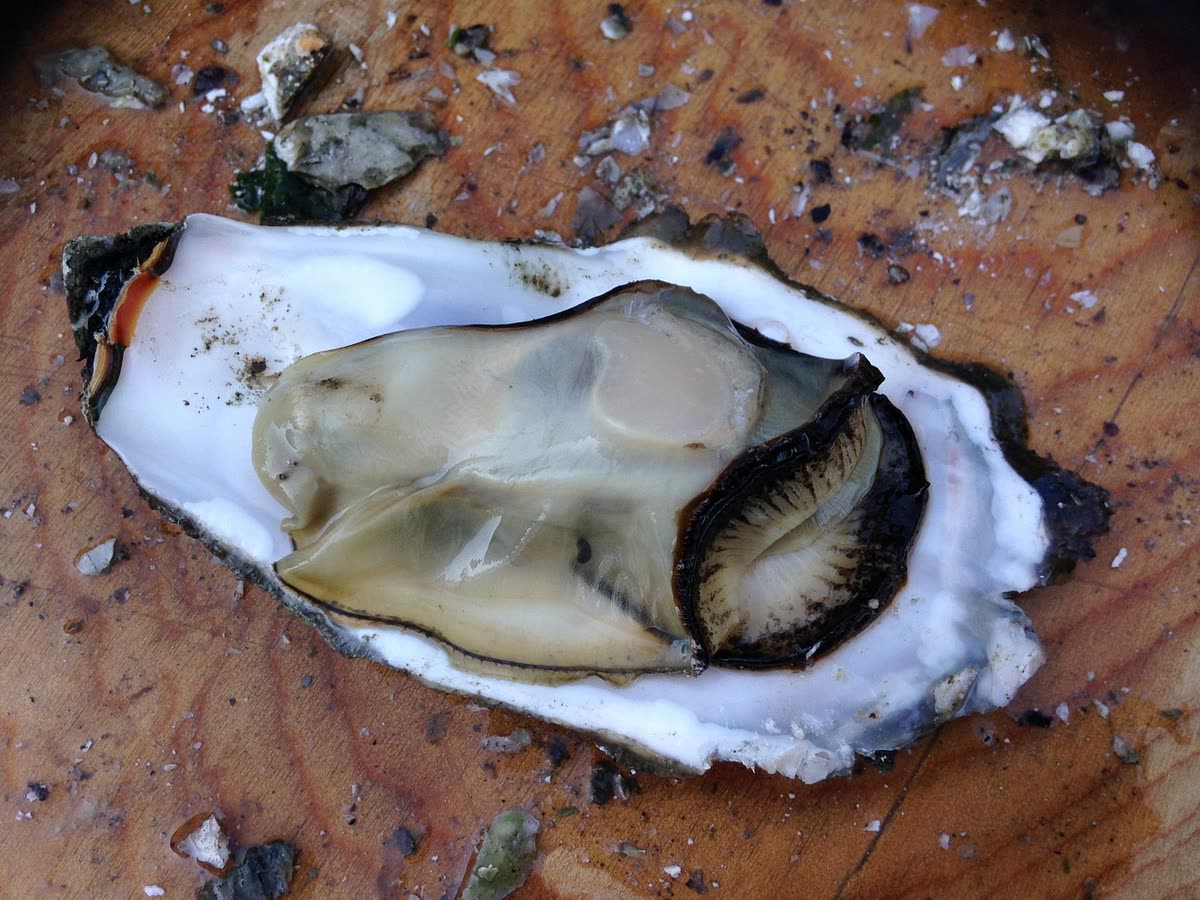
Ten seconds is not long enough to cook an oyster. It is long enough to warm the liquor, to loosen the muscle from the shell, and to put the smell of woodsmoke into the air above the plate — which is the whole point. A cold oyster is a fine thing. A warm one, eaten in a room that smells of fire, is a different sentence altogether.
The oil is made on Mondays. Onions are split and laid cut-side down directly on yesterday's embers until they are entirely black, then covered in cold-pressed rapeseed oil and left in the low oven for six hours. What comes out is not smoky so much as savoury — the sweetness of the onion has gone somewhere else and come back as depth.
Sea buckthorn grows in the dunes along this whole coast and almost nobody picks it, because picking it hurts. We cook the berries down with a little sugar until the acidity is sharp rather than aggressive, and one small spoon goes on last. Salt, smoke, fat, acid, cold. Then the next one.
On the plate
- The oyster
- Rock oyster, number two, opened to order and kept in its own liquor.
- Ember oil
- Charred onion steeped in cold-pressed rapeseed for six hours at 60°C.
- Sea buckthorn
- Dune-picked berries, cooked down to a loose gel with a little raw honey.
- Finish
- Bay salt, ground fine, and a turn of green pepper over the top.
To drink
Vallerain 'Craie' Blanc de Blancs — chalk, bread, and enough bubble to reset the palate.
The cellar listHalgrave Beds
Saltern Quay, two miles east
A four-person operation working twelve trestle beds on the east side of the channel. They open at first light and we collect on the way in.